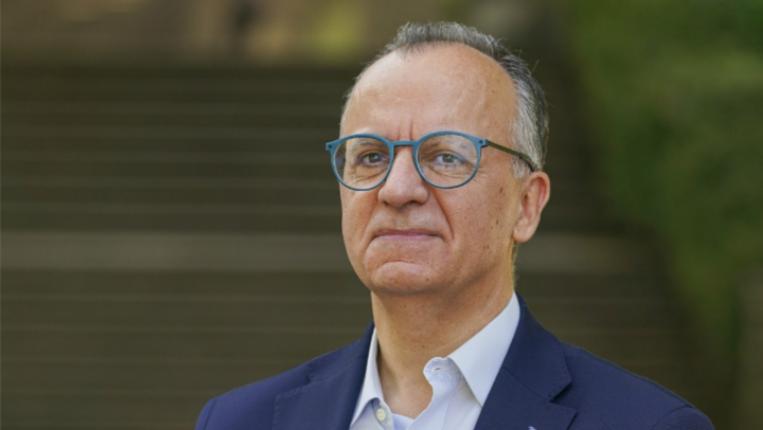


Laura Hidalgo-Downing, Universidad Autónoma de Madrid

The present module offers an introduction to creativity as a resource for everyday communication and for the negotiation of discursive and social practices. Key theoretical concepts, analytical tools and methods from Functional Linguistics and Cognitive Linguistics are applied to the study of creativity in literary and non-literary texts. The first session focuses on creativity in everyday language, the second one on the relation between creativity and figurative language and the third one on creativity, figurativity and multimodality. The concept of everyday creativity, which is an ability shared by all human beings, (Carter, 2004) is introduced in contrast to the traditional conception of creativity, which assumes creativity to be a gift of talented individuals. Theoretical and methodological approaches to the study of everyday creativity are discussed, followed by a detailed analysis of specific resources for creativity in various types of texts. The close relation between creativity, figurative language and multimodality (i.e. the use of modes such as images and sounds in addition to language) is discussed by drawing from research in Cognitive Linguistics applied to Discourse Analysis (Forceville and Urios-Aparisi, 2009, Hidalgo-Downing and Kraljevic-Mujic, 2020, Pérez-Sobrino, Littlemore and Ford, 2022). Creative resources are identified first in terms of linguistic, textual and semiotic features; second in terms of the functions they perform in specific contexts, such as creating solidarity and affiliation in face-to-face and online communication, persuasion, the expression of evaluation and emotion; and third, in terms of the critical or ideological potential of such features for social change.