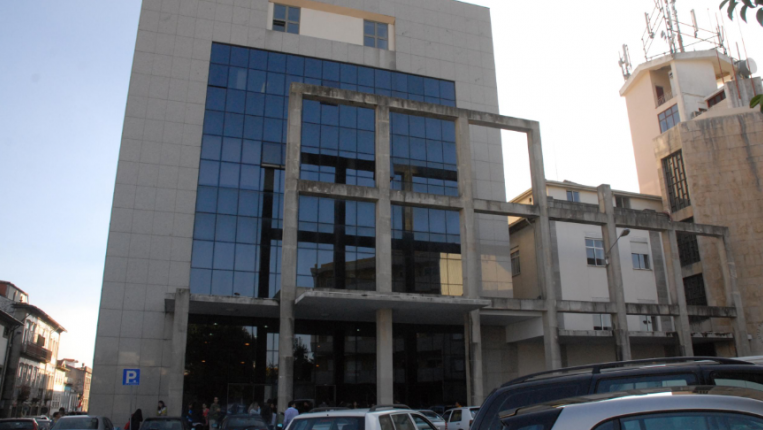


The Faculty of Philosophy and Social Sciences at the Braga Campus of the Portuguese Catholic University (UCP) is implementing a pedagogical renewal and innovation project based on Ignatian Pedagogy, an educational approach proposed by Saint Ignatius of Loyola, founder of the Society of Jesus.
Entitled ‘Renovar*te’ (Renew Yourself), this is a four-year project that began at the Braga faculty and aims to expand to the entire regional centre and also to the different campuses of the Catholic University in Portugal.
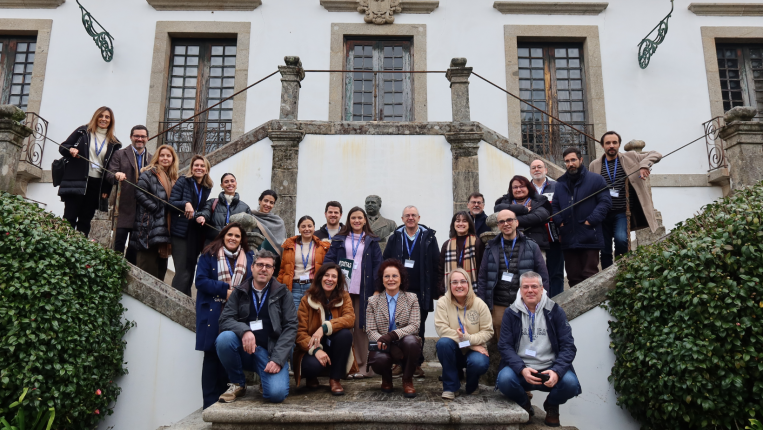
It was in this context that the initiative ‘Ignatian Mission 360º - The enigma of dimensions and values’ took place at Casa da Torre, in Soutelo, Vila Verde, on 14 January, with the participation of around thirty UCP teachers in a day of learning about Ignatian pedagogy and strengthening team spirit.
The coordinator of ‘Renovar*te’, Ângela Azevedo, explains that the project ‘represents an even greater commitment to pedagogical innovation inspired by Ignatian pedagogy’.
"Renovar*te continues the pedagogical innovation that we began some time ago, but now more inspired by Ignatian pedagogy. We want to consolidate the Ignatian identity of the Faculty of Philosophy and Social Sciences, which is a Jesuit faculty. We understand that Ignatian pedagogy is an extremely current pedagogical paradigm and can provide valuable insights for pedagogical innovation in higher education," she told Diário do Minho.

Working with dimensions and values
The academic adds that the Renovar*te project has four dimensions: organisational culture, continuous training, internationalisation and action research.
‘We believe it is essential to engage, motivate and raise awareness of this project among the educational community. Therefore, it makes perfect sense to start with activities aimed at the community, in this case teachers,’ she argues.
The event at Casa da Torre consisted of "an activity aimed at motivating, creating and consolidating the group and relationships, because in Ignatian pedagogy, learning takes place through the various dimensions of the person: cognitive, emotional and social. A team that is collaborative, works well together, and has emotional ties between its members will be able to reinforce academic learning and the integral development of students," he argues.
Specifically, through a circuit structured in six stations, which each team had to go through, this action allowed them to work on the dimensions of context, reflection and action, as well as the values of justice, cura personalis and magis.
In this context, the dimension of context aimed to ‘raise awareness among teachers to deepen their knowledge of the context in which students are involved,’ that is, ‘to understand who the students in front of them are and their specificities.’
The reflection aspect focused on ‘developing skills for attributing meaning to reality, creativity, reflection, and deepening understanding through constant questioning.’
In terms of action, ‘the need for active, society-oriented learning’ was advocated, maintaining a ‘direct connection with students' needs.’
In relation to values, the expert emphasised that ‘cura personalis is a very important value for Ignatian pedagogy, which has to do with self-care’.
‘The learning context must promote not only the acquisition of knowledge, but also self-knowledge, self-acceptance, and feeling good about others,’ she said, revealing that the action aimed to ‘help teachers reflect on whether or not the university is providing this cura personalis, both to the teaching staff and the rest of the educational community.’
In turn, magis is also an essential value in Ignatian pedagogy, in a constant invitation for young people to always seek more in their lives, aiming for full development. "For us, “more” does not mean quantity, but quality. We reflect on the decisions we make on a daily basis, whether they are an addition of quality and not necessarily an addition of quantity," said the researcher with a PhD in Educational Psychology.
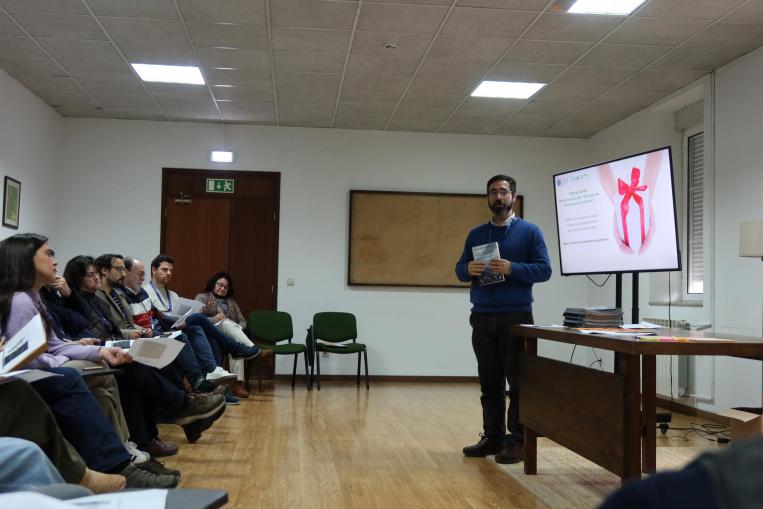
Bruno Nobre, director of the Faculty of Philosophy and Social Sciences at the Braga Campus of the Portuguese Catholic University, says that the Renovar*te project stems from the institution's desire to ‘promote innovation and pedagogical renewal’ in the face of ‘major social and even civilisational challenges that require the repositioning of higher education’.
‘The aim is to think about how to teach and train citizens for the future, based on Ignatian inspiration, which marks the identity of the Faculty of Philosophy and Social Sciences,’ he says, highlighting that the institution has ‘very valuable resources’ that can make an important contribution to pedagogical renewal in higher education.
The Jesuit priest points out that ‘the Faculty already has a distinctive pedagogical approach.’ "Our students recognise that there is a very personalised approach. We know our students and we follow up with them. In addition, active learning methodologies are already in place, such as Problem-Based Learning or Service-Learning (ApS)," he explains to Diário do Minho.
He emphasises that ‘highly personalised support is one of the characteristics of Ignatian pedagogy. There is a Latin expression that translates this more personalised support, which is cura personalis. This is already a distinctive feature of the Faculty, but we want to go further.’
In his view, ‘the challenges are evident, with a highly digitised society’. The revolution brought about by Artificial Intelligence ‘poses very demanding challenges, but also many opportunities’.
In this context, he argues, it is necessary to consider the dimension of ‘student attention and concentration’ and how to foster a ‘more vibrant academic community, with greater participation,’ as well as the ‘ability to have an impact on society.’
‘We want our students to have the ability to leave a mark on society. This is also one of the important dimensions of the Ignatian vision of pedagogy, to form generous men and women with a spirit of service, capable of leaving a mark. Much has been done in this area, but the creation of this group is a clear sign that we want to invest even more,’ he concludes.