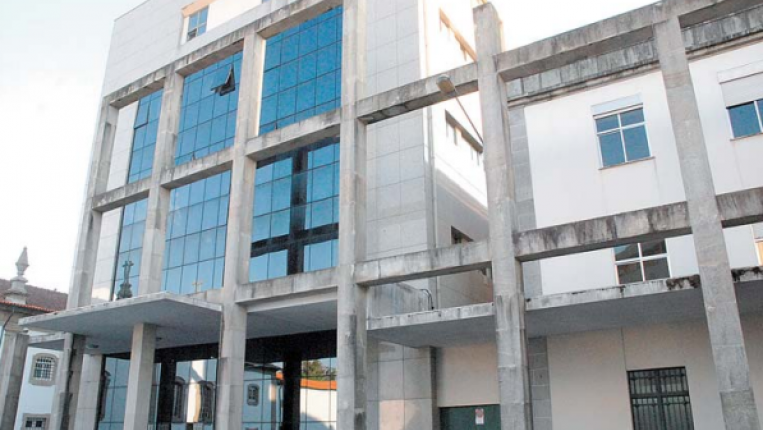
The International Congress of Pedagogy debates the challenges and opportunities created by artificial intelligence at the Braga Regional Centre of the Portuguese Catholic University.
‘Without strong, very strict regulation, artificial intelligence (AI) will destroy many lives,’ warned José Manuel Lopes yesterday, coordinator of the 6th International Congress on Pedagogy, which runs until tomorrow at the Faculty of Philosophy and Social Sciences of the Braga Regional Centre of the Portuguese Catholic University. This Jesuit priest and specialist in Educational Sciences said at the opening of the Congress, whose central theme is “Education in the Digital Age: subjectivities, nomadism and powers”, that AI opens up ‘immense opportunities’, but that the dangers or challenges it represents ‘are no less significant’. For this professor at the Faculty of Philosophy and Social Sciences, AI opens up ‘a new and significant phase in humanity's relationship with technology’, which has ‘anthropological and ethical implications’ that must be debated.
This is what is being done at the International Psychology Congress, which began yesterday to address issues such as “The future of homo digitalis: dream or nightmare?”, “Education in the digital age: creativity and autonomy” and “Privacy, security and sovereignty”. The Congress proposes a critical reflection on the impact of the digital world on education and people's lives, considering the personal, interpersonal, spiritual, social and political dimensions. José Manuel Lopes identified among the dangers arising from AI the development of “new forms of poverty” and the “widening of social inequalities”, along with the promotion of the “technocratic paradigm to solve all the world's problems”.
Although it can be ‘an educational resource’ if used well, AI, according to the coordinator of the International Congress of Pedagogy, promotes ‘social disintegration’ and “misinformation”, thus contributing to ‘destroying democracy’.
For this reason, the priest and academic believes that ‘if there are no very clear and even punitive rules to prevent people from doing anything’ in the digital world, ‘people's privacy and dignity are at risk’.
The regulation of AI use ‘must be global,’ according to José Manuel Lopes.
Also at the opening of the VI International Congress on Pedagogy, the vice-chancellor of the Portuguese Catholic University, Paulo Dias, drew attention to ‘the new vulnerabilities’ that AI brings, namely ‘dependence on algorithms’ and ‘pressure for constant performance’. According to the Vice-Chancellor, the Congress, which is being held at the Catholic University's Regional Centre in Braga, should, in addition to the academic analysis of the phenomenon of AI, result in ‘ethical, educational, social and political reflection on the impact of digital technology on our lives’.
On the same occasion, the director of the Faculty of Philosophy and Social Sciences, Bruno Nobre, pointed to this educational establishment as a privileged place for debating the ‘extraordinary educational challenges’ arising from the use of AI.