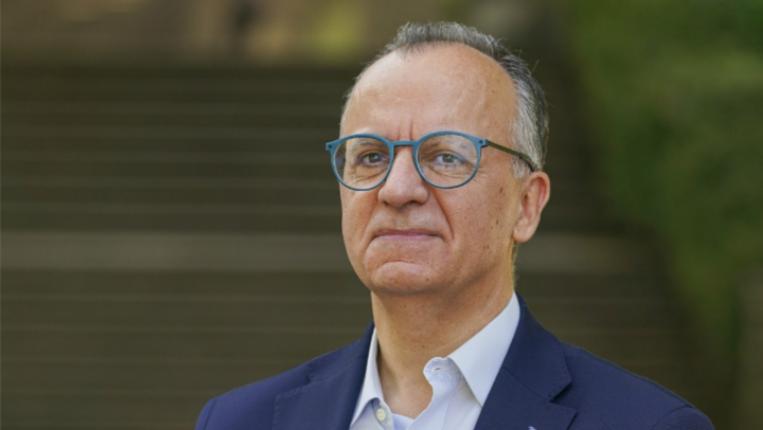


A philosophy course exclusively for dstgroup aims to foster critical thinking and promote freedom among more than 700 employees. The project is carried out in partnership with the Catholic University.

For the eighth consecutive year, dstgroup will offer a philosophy course for its employees, continuing a project developed in partnership with the Faculty of Philosophy and Social Sciences at the Portuguese Catholic University (UCP) in Braga, which brings philosophical thought into the company and embodies a training vision that goes beyond strictly technical skills.
The goal of this initiative—which reaches more than 700 employees in this second year of the 4th Cycle of Studies—is to foster critical thinking, the ability to question, and individual freedom, placing knowledge, human development, and the pursuit of a good life at the center of the group’s organizational culture.
In a statement, dstgroup notes that the program covers areas such as logic, aesthetics, philosophy of religion, contemporary thought, anthropology, metaphysics, politics, economics, and art, providing employees with various tools to interpret the world, understand society, and develop a more critical and pluralistic perspective on contemporary challenges.
“For this year, we have chosen authors and works of great complexity and great relevance: *History of the Future* by António Vieira; Adam Smith’s *The Wealth of Nations* and *The Theory of Moral Sentiments*; Paul Ricoeur’s *Oneself as Another* and *Philosophy, Ethics, and Politics*; and Kant’s *Critique of Pure Reason*, *Critique of Practical Reason*, and *Critique of Judgment*. We have also chosen a very special author, a mystical philosopher who wrote about work and faith.
“We will study Simone Weil’s *Rooting* and *Gravity and Grace*,” states dstgroup. “These choices are not arbitrary and always revolve around the idea of practical wisdom—phrónesis—an ethics of the essentials, duty for its own sake, the awareness we must have of the moral law—‘reason as fact’—spirituality, objective morality, equity as a corrective measure, and freedom,” explains José Teixeira, chairman of the Board of Directors of dstgroup.
This investment stems from a broader conception of corporate training. For dstgroup, training employees means not only developing technical skills directly related to their professional activities, but also investing in the holistic development of individuals, fostering curiosity, intellectual autonomy, sensitivity, and the ability to think and make decisions freely and consciously.
Developed since 2020 in partnership with the Portuguese Catholic University, the project has seen growing participation among employees.
About 500 people participated in the latest edition—50% more than in the previous cycle—a trend that demonstrates internal interest in training that introduces topics traditionally excluded from professional training programs into everyday business life.
For Aníbal Cardona, Senior Occupational Safety and Health Specialist at dstgroup, the experience of this training could not have been more enriching: “When we work with concrete, we tend to seek certainties. This ‘immersion’ in philosophy—its thinkers, schools of thought, and controversies—challenges us to question our deepest convictions, to become aware of the boundlessness of reflection, and of the fact that it is rarely possible to reach absolute consensus. Confronting our own biases, rather than causing cognitive discomfort, fosters within us a broader empathy, enabling us to understand and accept perspectives and worldviews that are radically different from our own.”
Professor Carlos Morais is responsible for the scientific coordination of the program, with additional involvement from Professor Bruno Nobre, director of the Faculty of Philosophy and Social Sciences at UCP.
“Reflecting on the great philosophical controversies in the history of thought becomes a true laboratory for thinking about what it means to be human. I have no doubt that this experience stimulates the creativity and critical thinking of the students. I am certain that it helps shape better citizens at a moment in history when the ability to think is absolutely essential,” says Bruno Nobre, director of the Faculty of Philosophy and Social Sciences at UCP.